
The Perfect English Scones Recipe
So, I’ve been trying to make the perfect scones for most of my adult life and have tried dozens of recipes. Nothing has ever had the lightness and flaky texture of the scones I enjoyed in the U.K.
Full disclosure: Almost everything I cook starts with The Joy of Cooking before I branch out to other sources like Craig Claiborne’s 1961 The New York Times Cookbook, maybe a cookbook from Ina Garten or Mean Martha, and probably at least a peak at a recipe from Bon Appetit and Food & Wine. Very few things we prepare are a single as-found recipe. Almost everything is a mashup of two (or more) recipes.
The first time I made scones I followed the recipe exactly as laid out in the much-maligned 1979 version of The Joy of Cooking. And they were flour-y rocks. Hard, tough and chewy.
Over the years, I’ve run across various recipes and decided, after wasting a lot of butter and flour, that heavy cream is not the best liquid in a scone. I think that’s what makes them heavy.
So, today I use buttermilk. And I don’t include any extras like raisins or chips. Ideas for those are below but you won’t see them included here.
And, lastly, because baking is a science, you’ll see my ingredients are weighed as much as possible. And, I know a glass measure is preferred for liquids but I just happen to have a ¾ cup metal measure so I don’t have to eyeball the buttermilk.
I also prefer to mix this in a food processor. I find the machine incorporates the butter into the flour quickly resulting in less warming of the butter. But be cautious. Incorporate the butter with a delicate touch: pulse quickly and keep a close eye on it. You want to still see some small bits of butter.
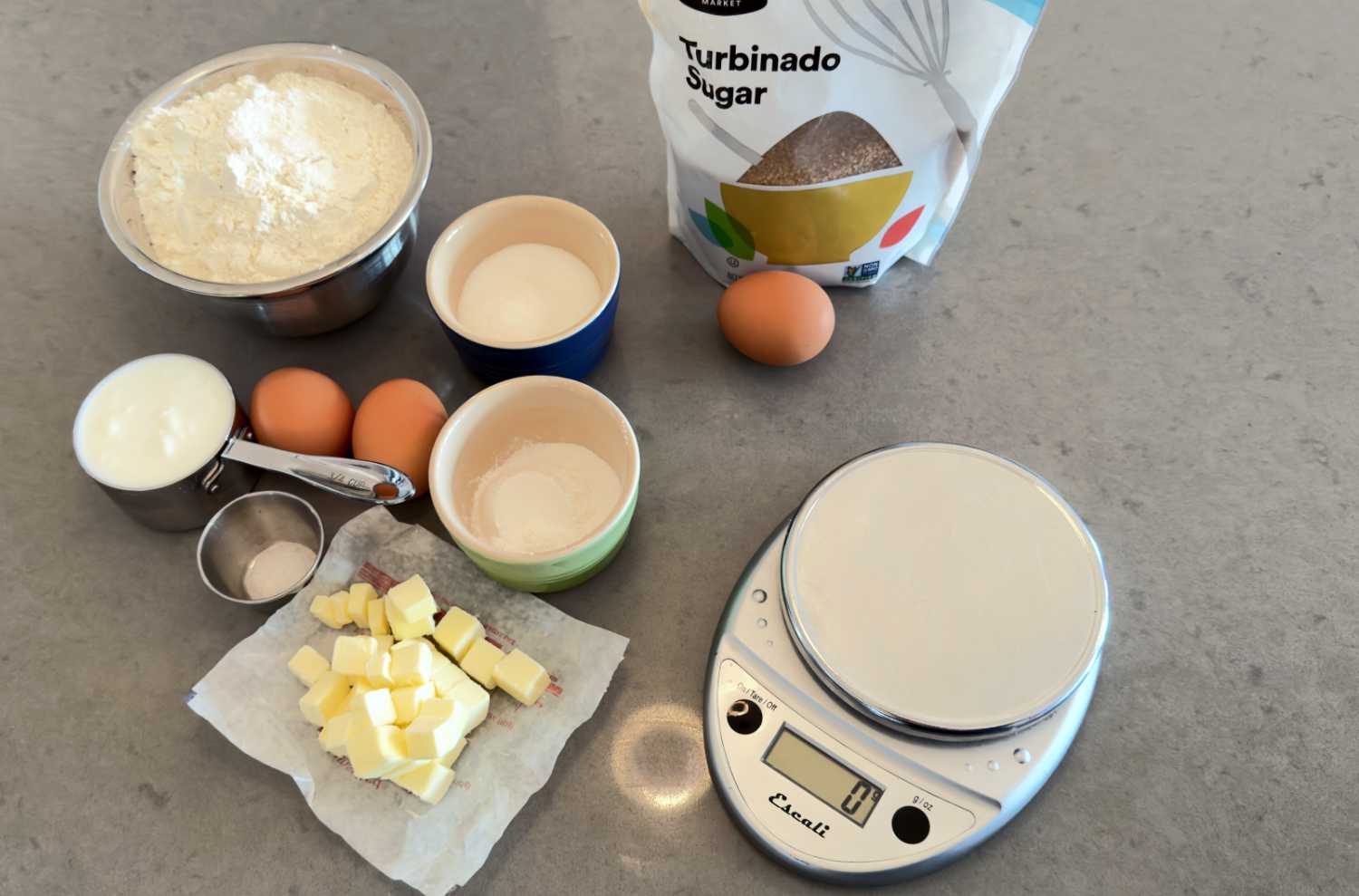
Ingredients
- 500 grams all-purpose flour (about 3½ cups)
- 86 grams sugar (about ½ cup)
- 24 grams baking powder (2 Tablespoons plus 1 teaspoon)
- Pinch of salt
- 94 grams unsalted butter (about 7 Tablespoons)
- ¾ cup buttermilk
- 2 eggs
- 100 grams raisins, blueberries or whatever (completely optional)
For the wash before baking
- 1 eggs
- turbinado or other coarse sugar
Hardware
- ⅛ sheet pan (~9” × 13”)
- rolling pin
- bench scraper
- ¼ sheet pan (~13” × 18”) lined with parchment paper or a non-stick baking mat
- Food processor
Preparation
- Break your butter down into bits about the size of small sugar cubes and place in the freezer while you assemble your other ingredients.
- Break 2 eggs into a small bowl and whisk together. Add buttermilk and whisk to combine.
- Place flour, sugar, baking powder and salt in the bowl of your food processor and pulse a couple of times to mix together.
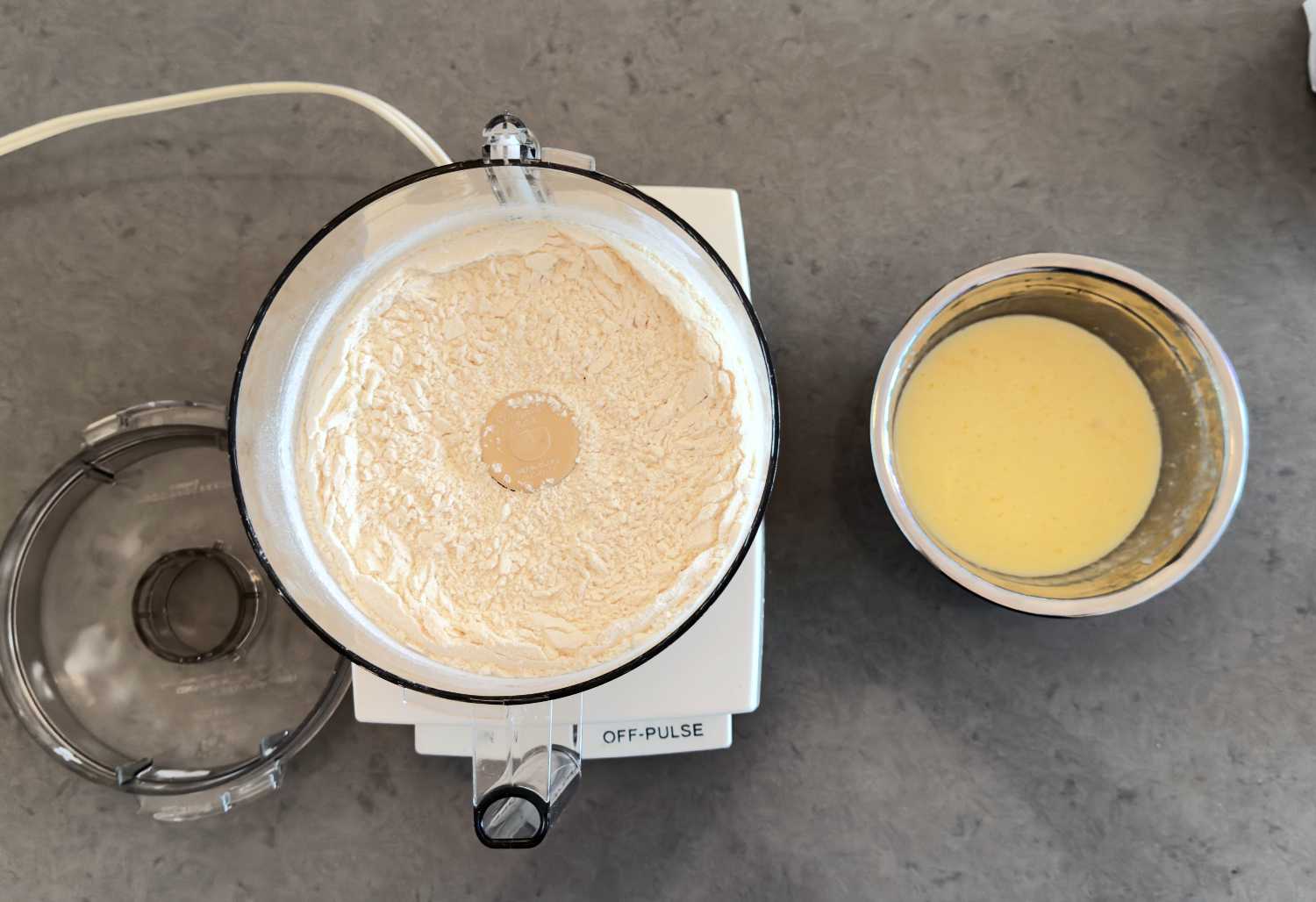
- Drop your cubed butter into the food processor and pulse a few times to incorporate the butter. Keep an eye on this to prevent melting the butter.
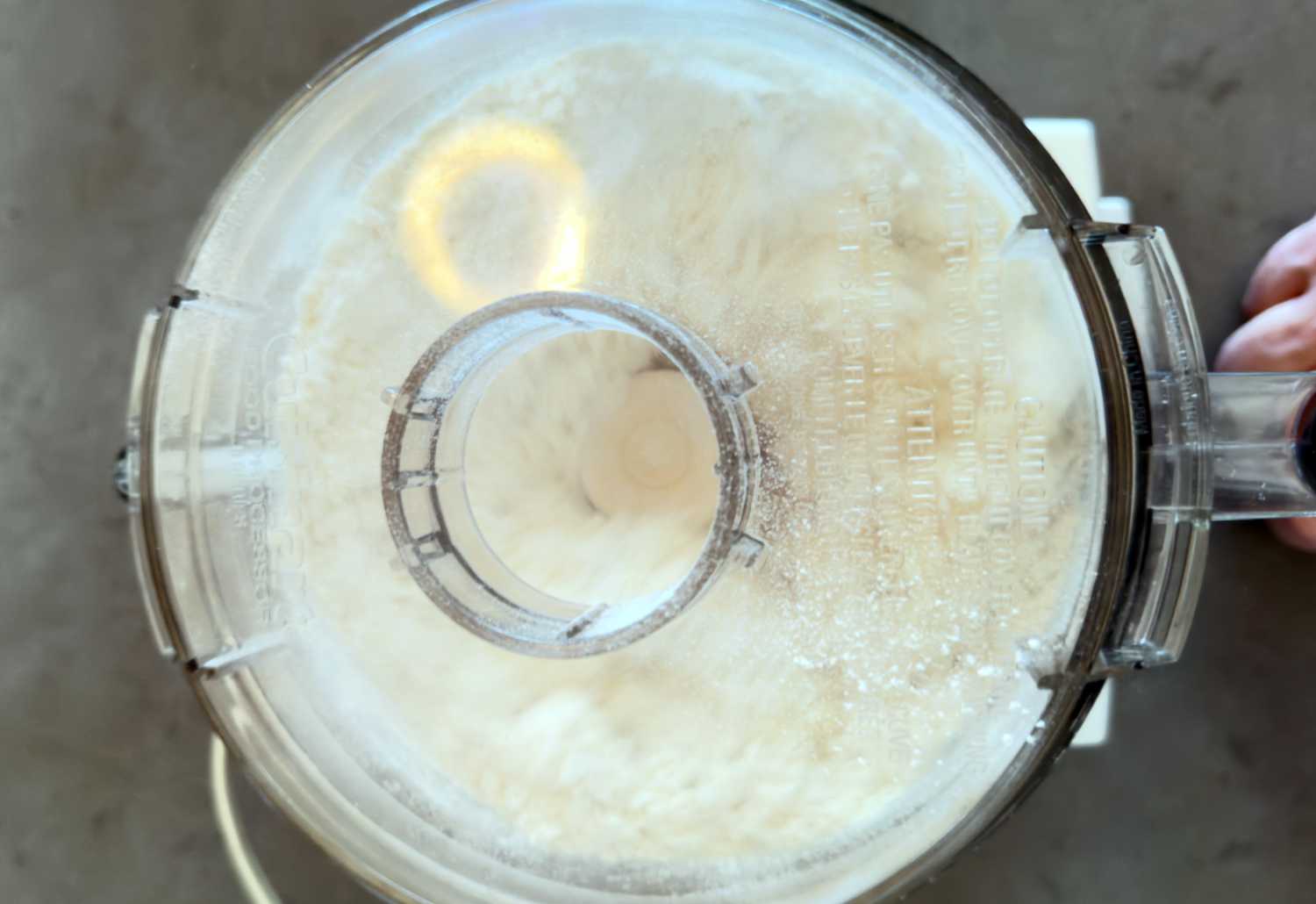
- Pour your wet ingredients into the food processor (it will be getting pretty full by now) and pulse 4 or 5 times just until the dough begins to form a shaggy ball. Don’t overmix!
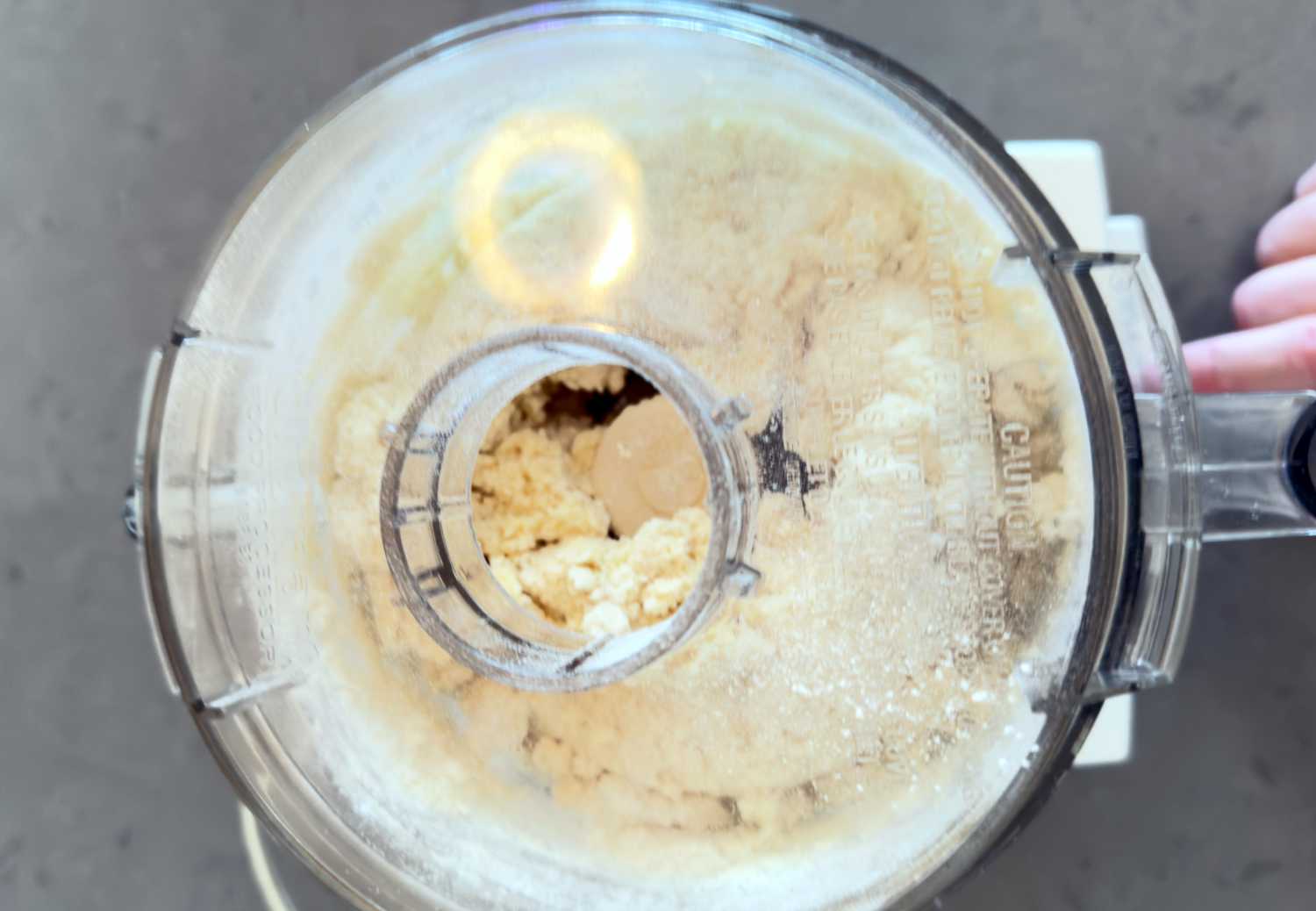
- Very lightly flour the ⅛ sheet pan and dump your dough onto the sheet pan.
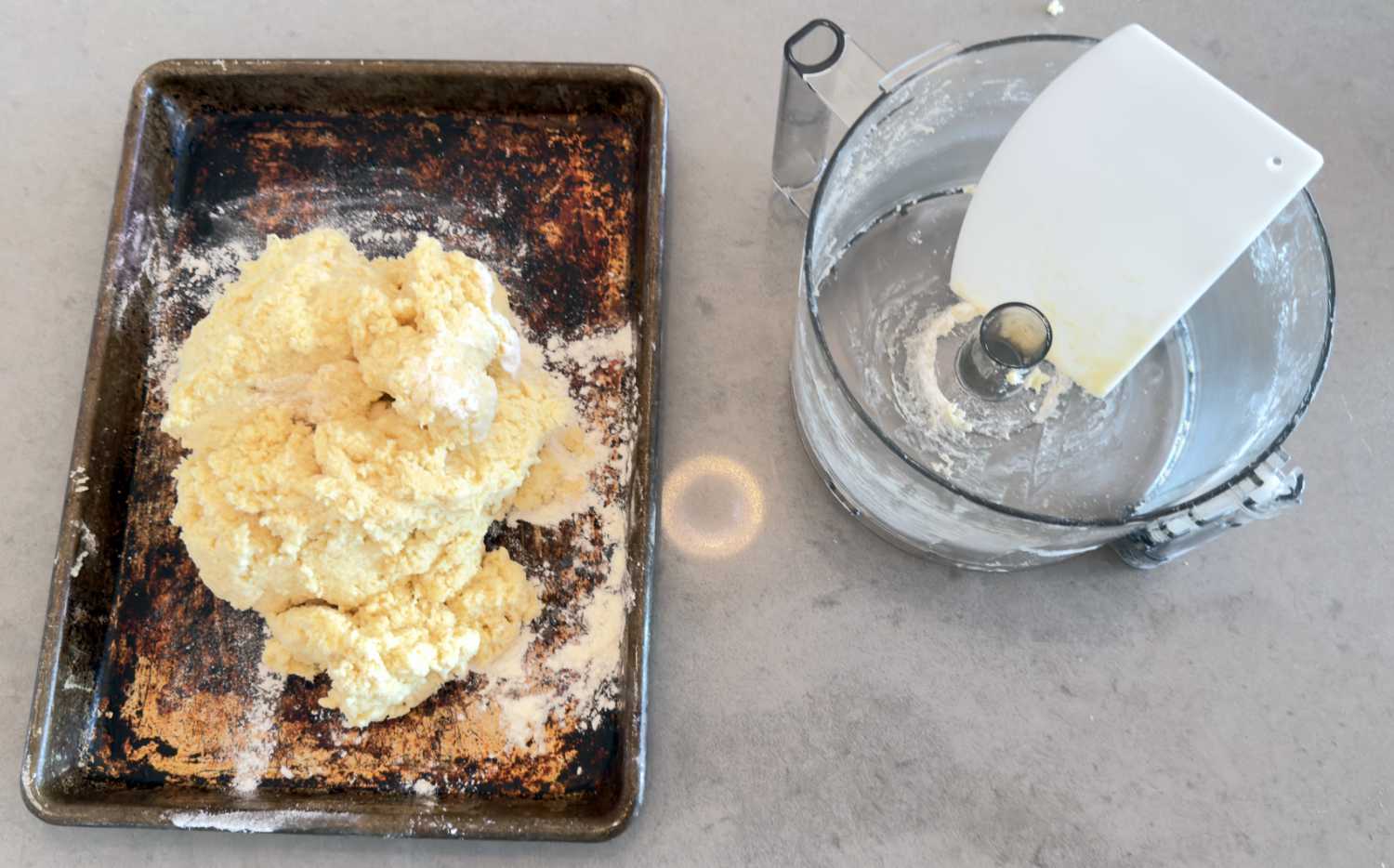
This is where you can add your raisins or other extra bits. Spread the dough chunks out, sprinkle your additions on the dough and fold them in trying to get them uniformly distributed.
- Quickly fold the dough onto itself until it begins to come together. Work quickly using a light hand to prevent warming the dough.
- Press down into an approximate square about the depth of the baking sheet.
- Cover with plastic wrap and refrigerate for 30 minutes to let the flour hydrate.
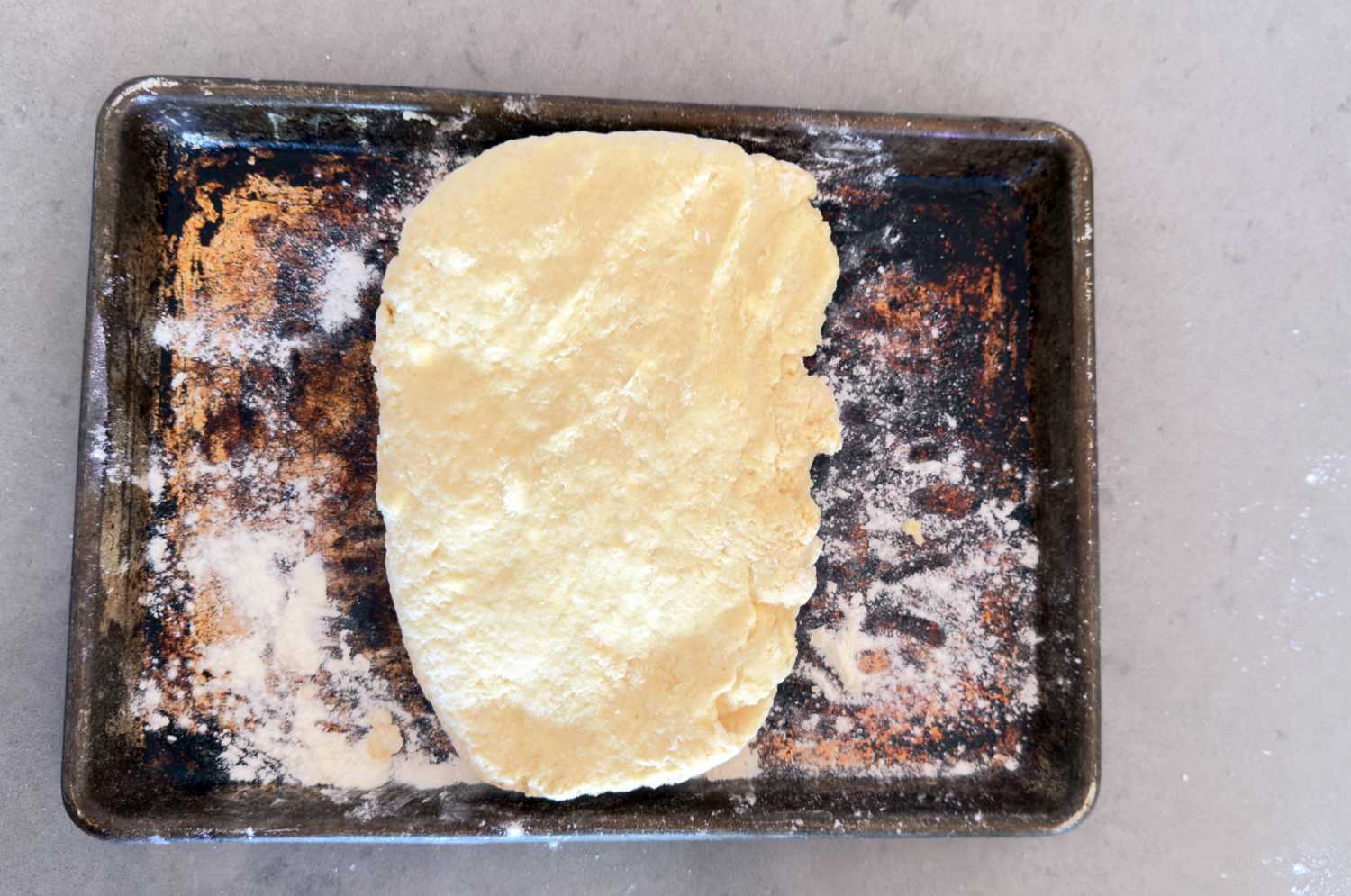
- After 30 minutes pull the sheet pan from the refrigerator, remove (and save) the plastic wrap and, using a bench scraper, shape into a uniform square/rectangle trying to get the corners pretty square. Scones are a little rough and ragged so perfection is not required.
- Use a rolling pin to ensure the dough is an even thickness, reshaping the edges as necessary with the bench scraper. This will help your scones cook evenly.
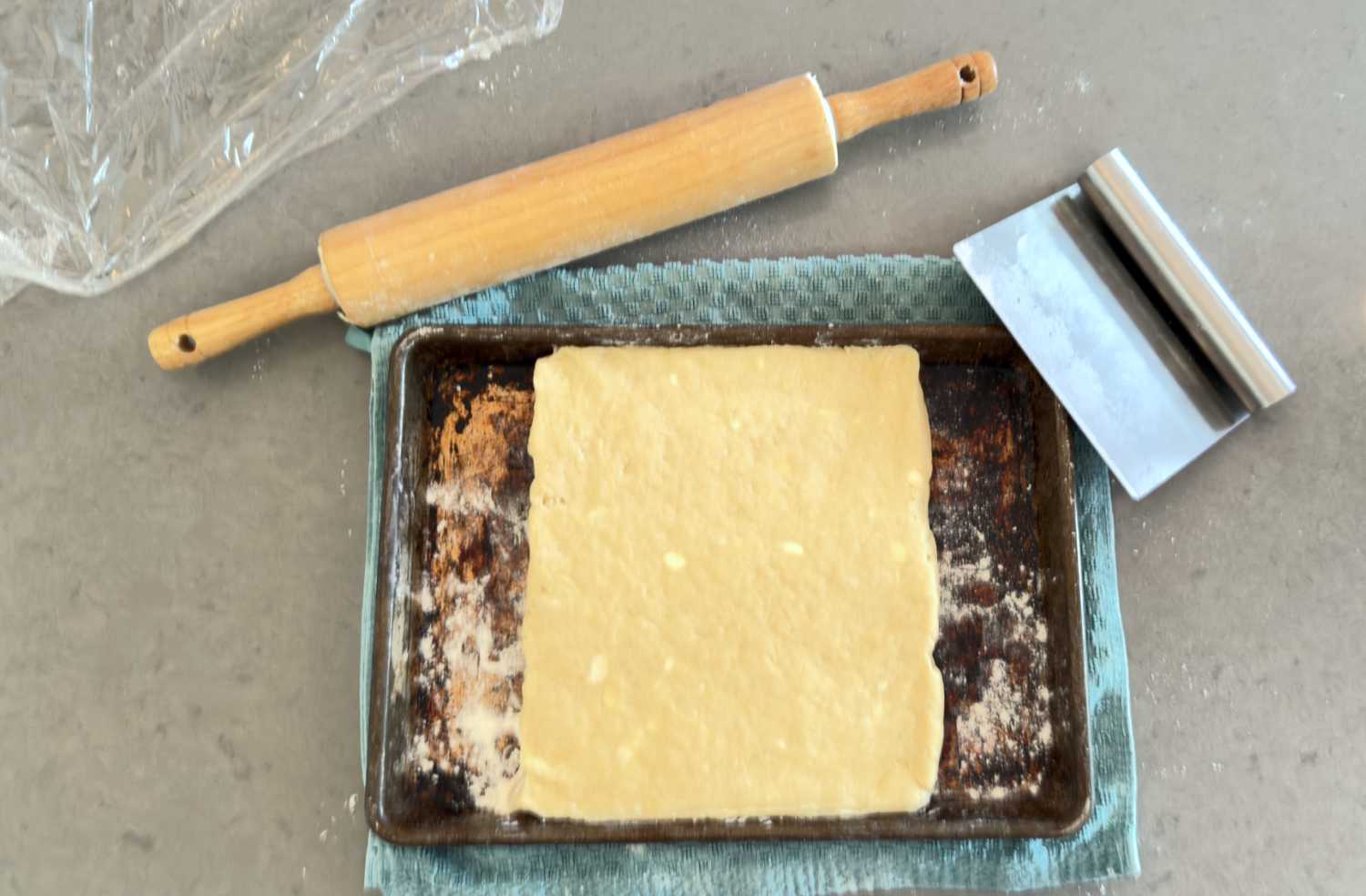
- Using the bench scraper divide your dough into roughly equal quarters (mine below are a little wonky).
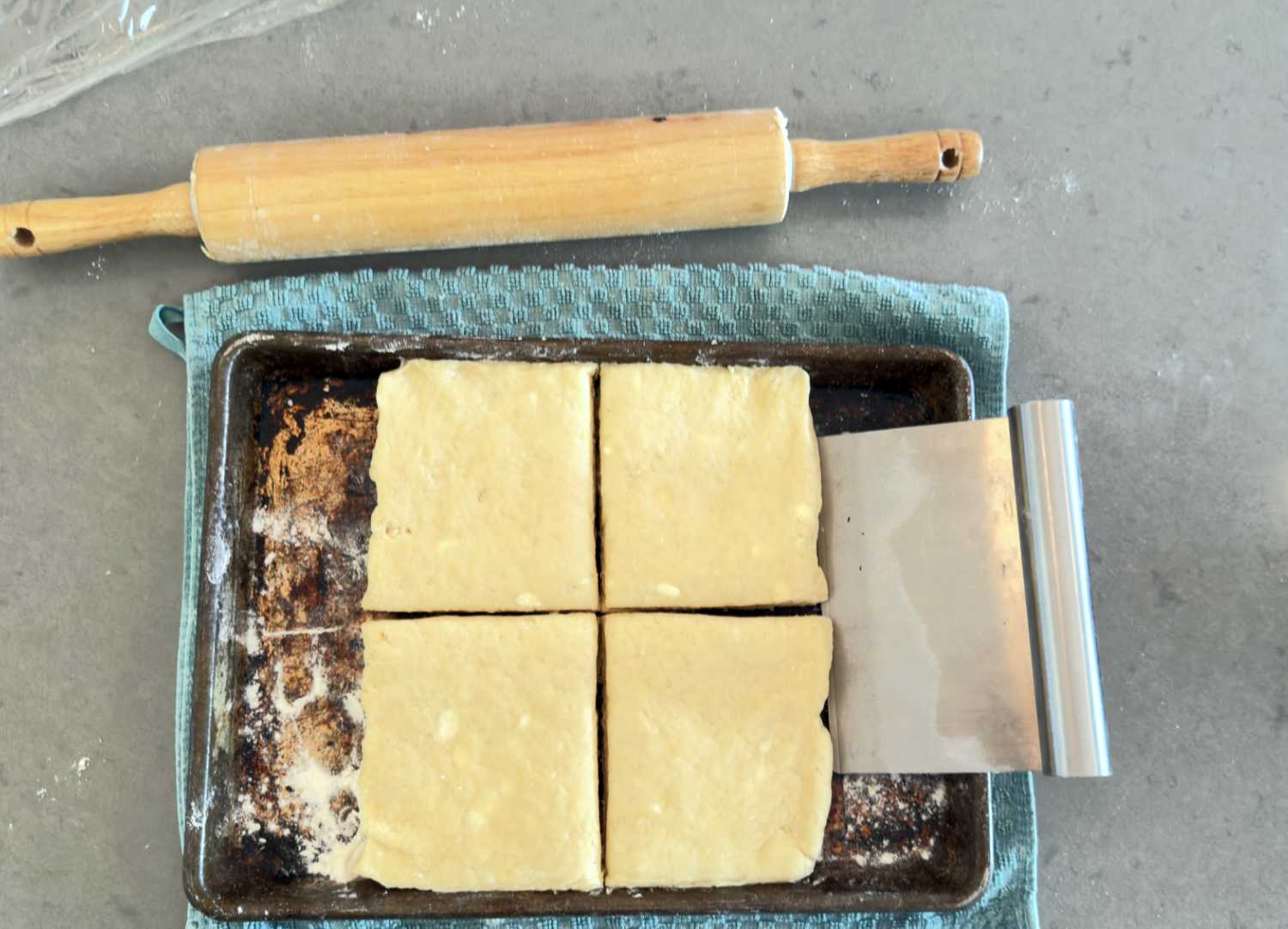
- Then cut each quarter on the diagonal to create triangle shapes.
- Using your bench scraper create a small gap between each triangle so they don't glue themselves back together.
- Replace the plastic wrap ensuring a fairly tight seal. Place baking pan in the freezer and freeze for at least 20 minutes.
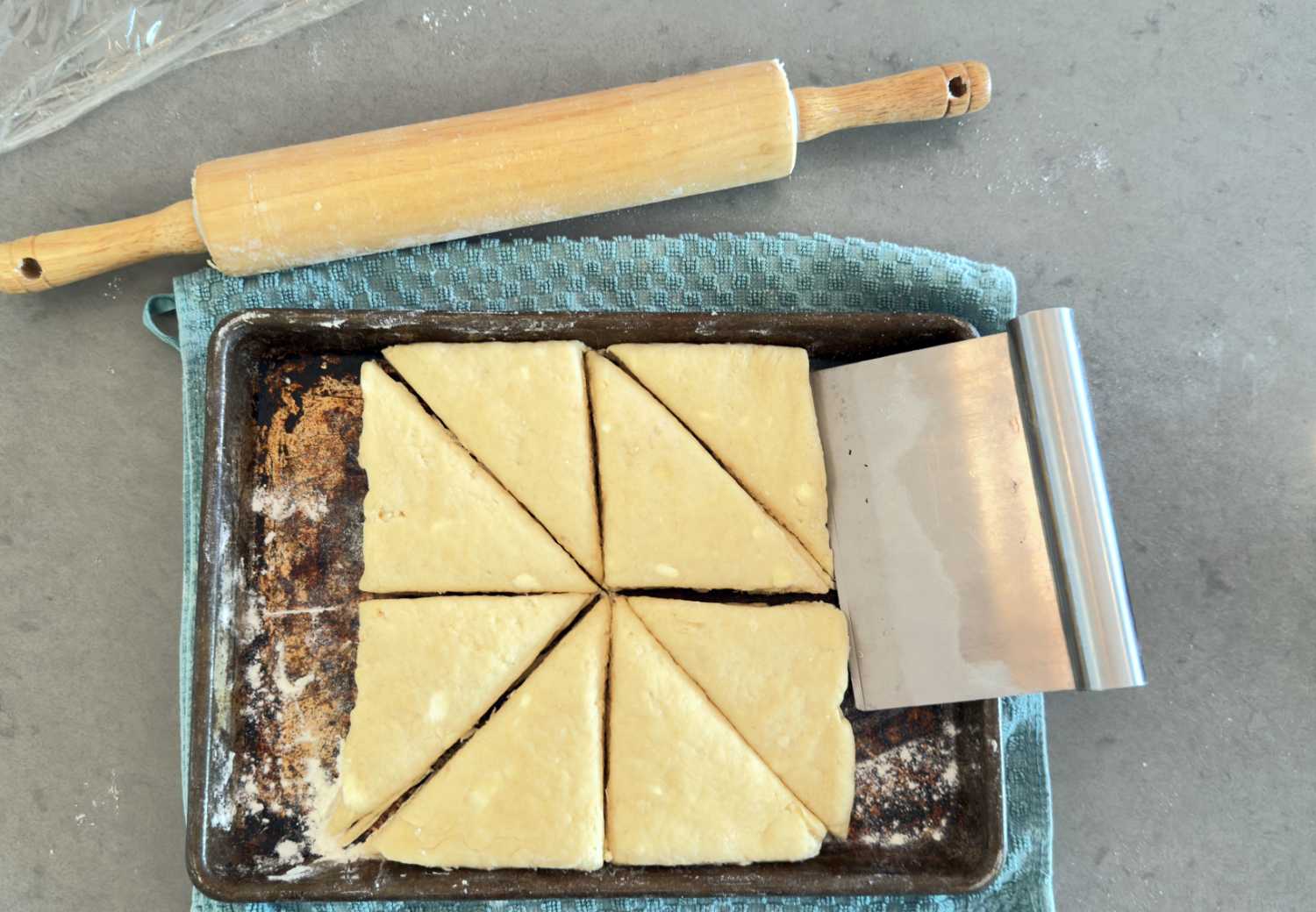
Now you have a decision to make. After freezing the scones you can pull them out and bake them as outlined below.
Or, you can freeze them as they are. Just wait until they’re completely frozen (an hour is safe) then place them in a freezer bag, push out as much air as you can and freeze for up to 3 months.
I find that beyond 3 months the scones begin to lose some resilience: the edges get droopy and they don’t crisp up as well.
Bake!
- Preheat oven to 400ºF.
- Line a ¼ sheet pan with parchment or a baking mat.
- Whisk the remaining egg in a small bowl. Gather your turbinado or other coarse sanding sugar. (This helps create a deliciously crunchy top with great visual appeal!)
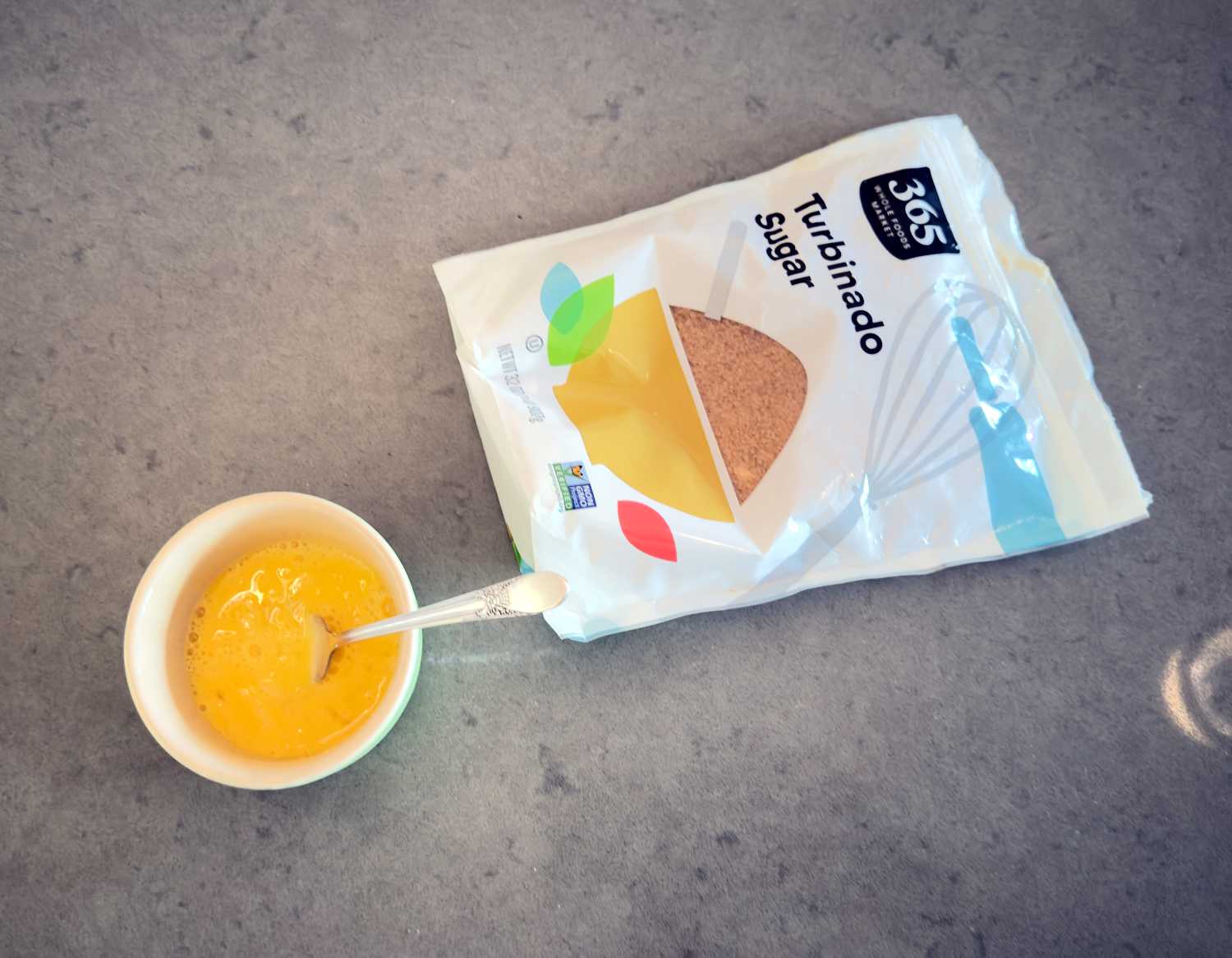
Some recipes call for cream. I find egg creates a crispier top which we prefer. If you want a softer, more biscuit-like texture use a little cream or milk.
- Remove scones from the freezer and place on the second baking pan leaving plenty of room around each scone.
Note the freezer bag ready to store half the scones for later.
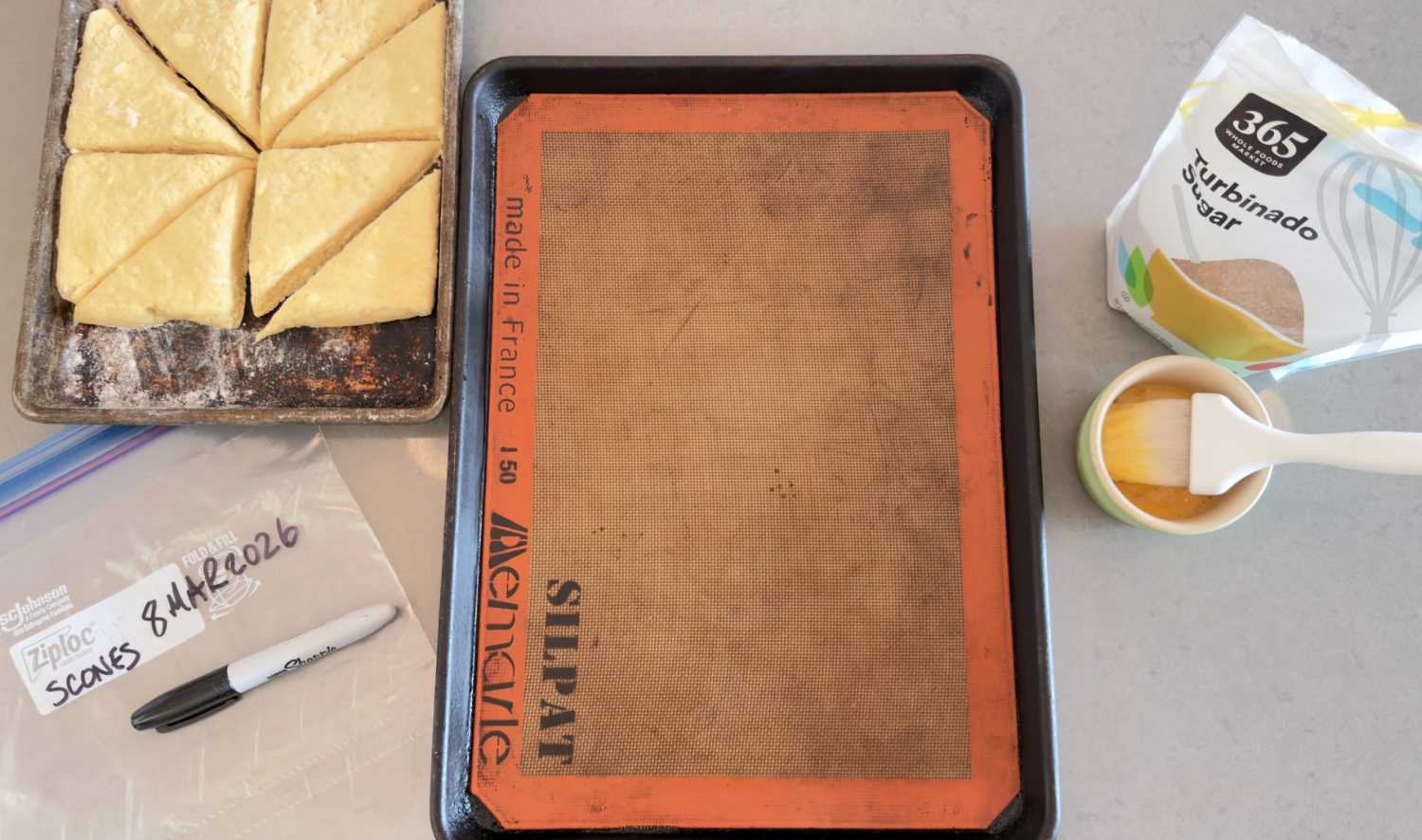
- Brush just the tops with a little egg.
- Sprinkle turbinado sugar on each scone.
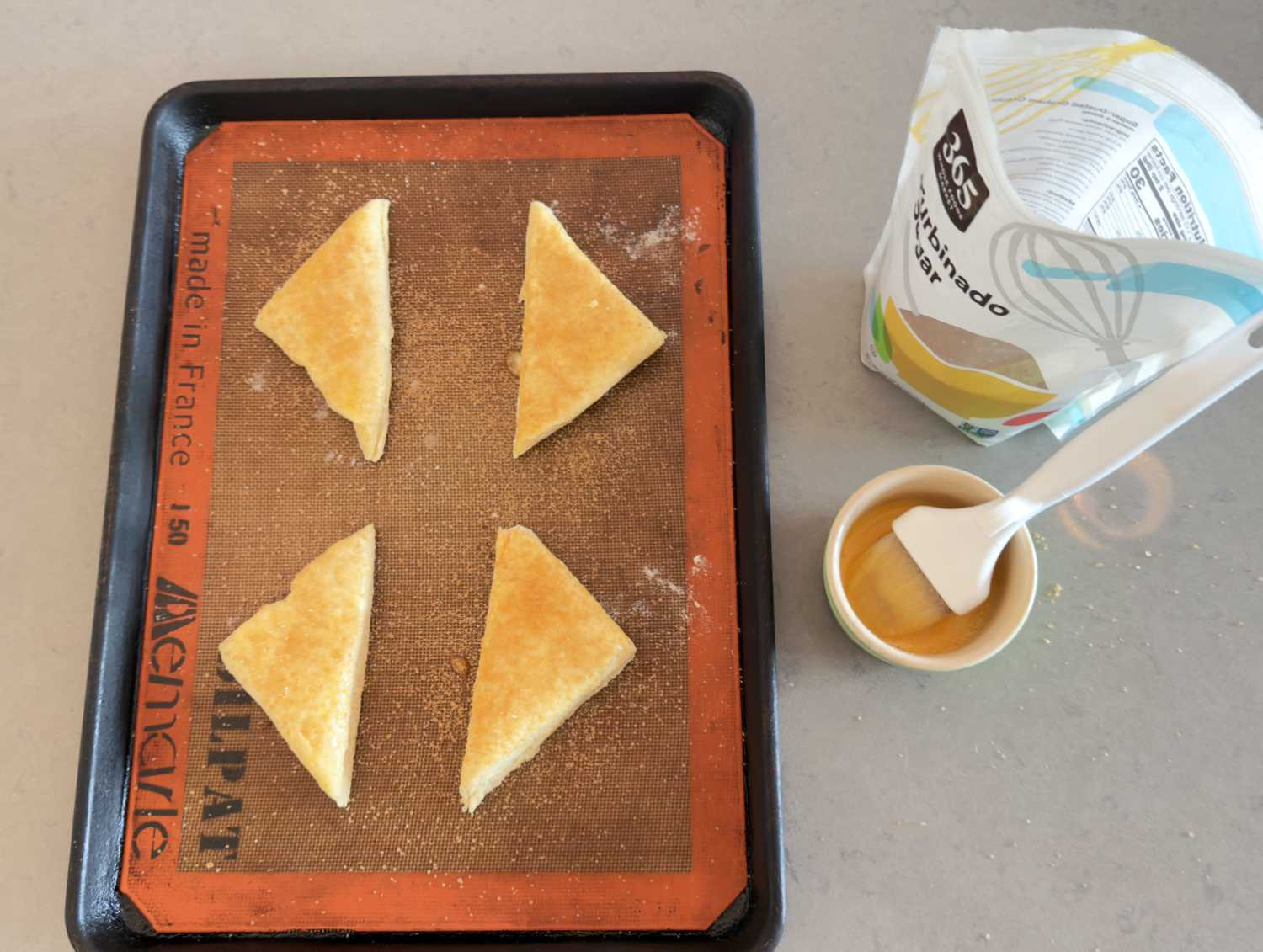
- Pop into your preheated oven and bake about 12 minutes.
- Check the scones at 12 minutes. They will probably still be a little pale. Rotate the pan and bake 2-3 more minutes until they are the perfect golden brown.
- Remove from the oven and cool on a wire rack for a few minutes just to keep from burning the roof of your mouth. You want to serve these fresh out of the oven for optimum enjoyment and maximum smile-age.

- Pull out your clotted cream (you DO have clotted cream right?) and marmalades and enjoy. Maybe with a nice cup of tea or coffee.
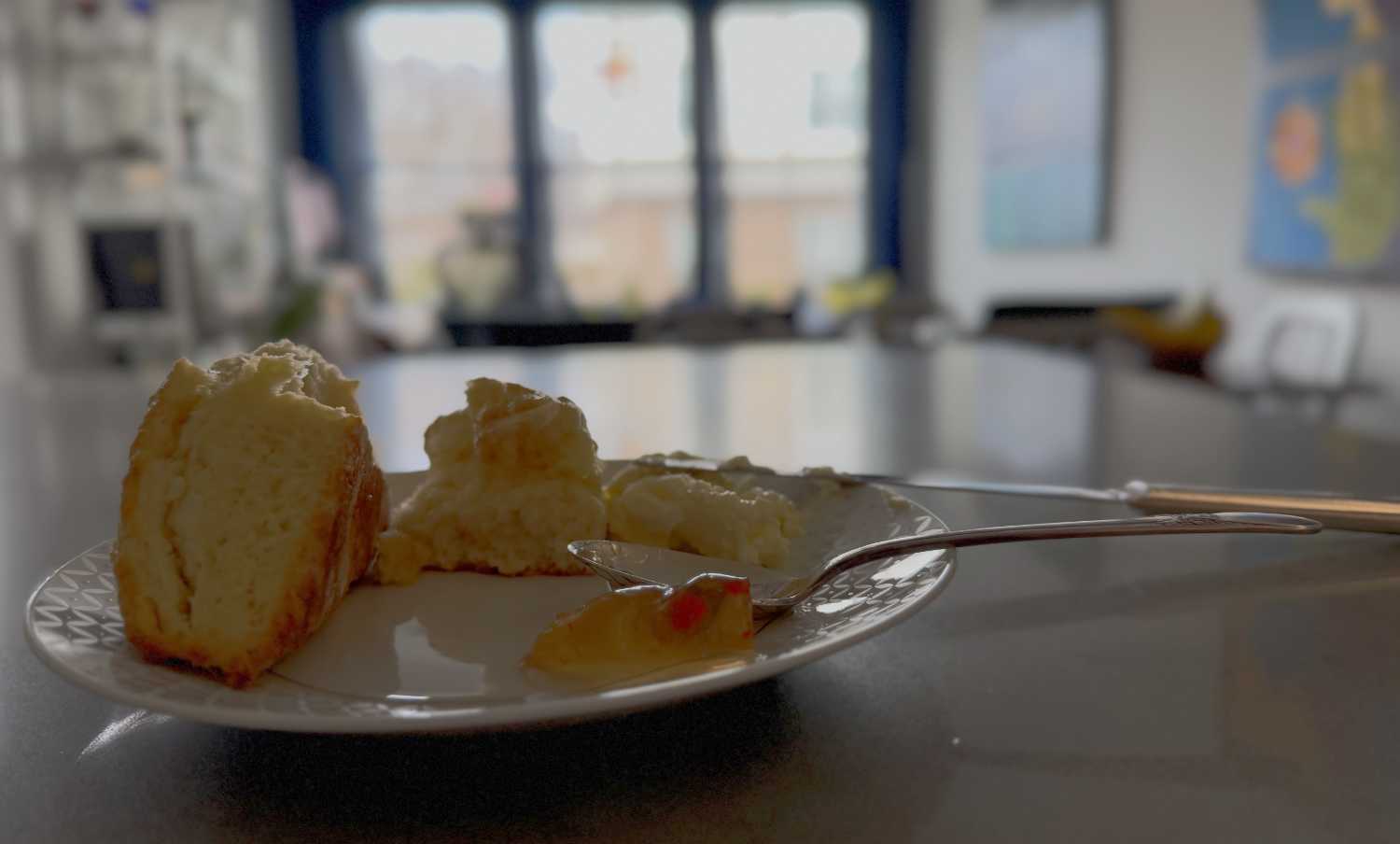
You can rewarm scones in a 350ºF oven for about 5 minutes or take your chances with the microwave. The oven will keep them nice and flaky on the outside.
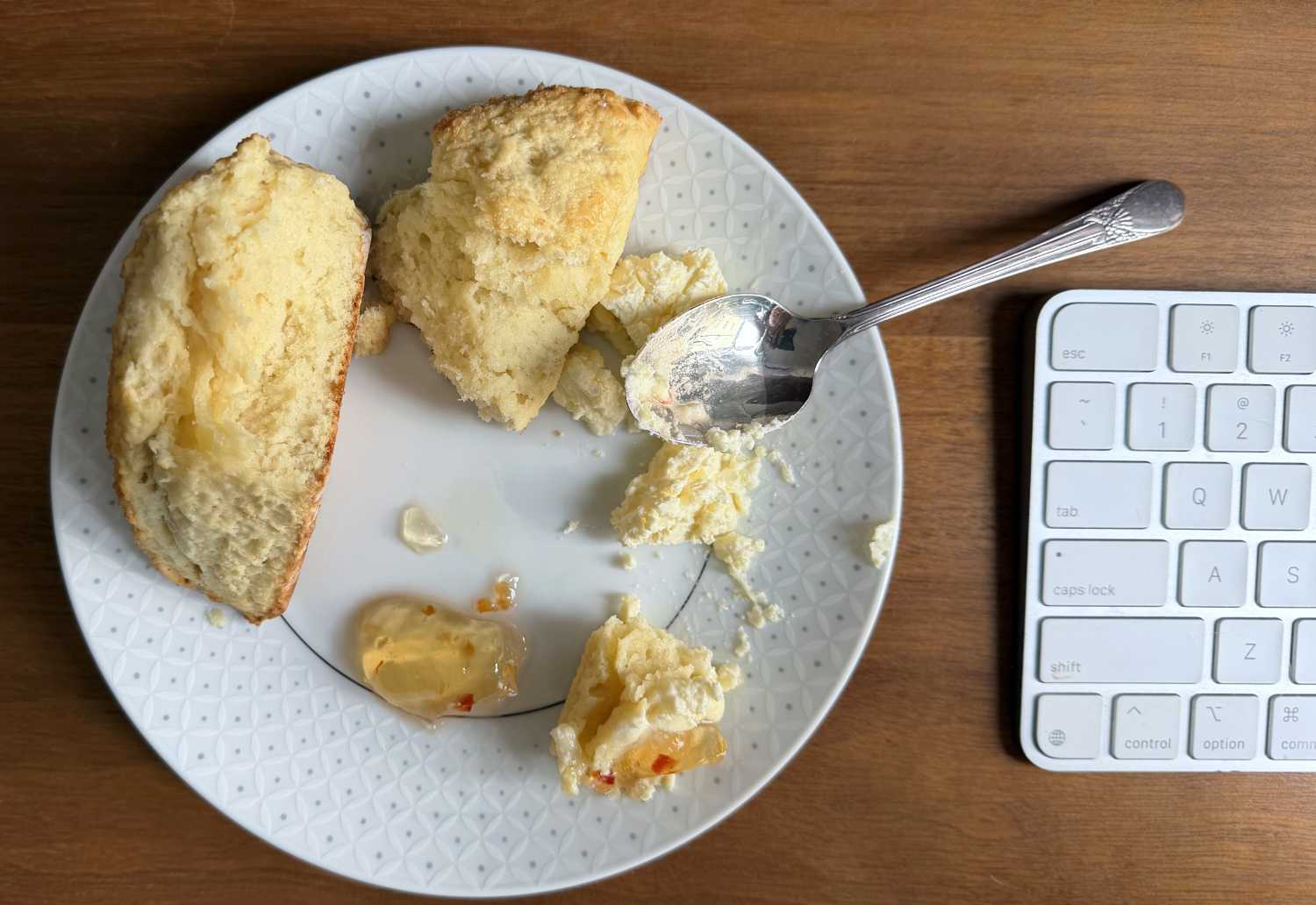
To the baker go the spoils...